‘Seating can be a problem with loud brass or percussion
seated immediately behind. You want them to bugger off because they’re
deafening you, and it’s not their fault.’ – Violinist

This comment from
The
Prestige Economy of a London Orchestra, a revealing
PhD thesis by Dr
Francesca Carpos-Young, highlights a situation which led to
Goldscheider v The
Royal Opera House Covent Garden Foundation, the subject of tonight’s King’s College
London event.
(The star turn for me is British Sign Language interpreter
Richard Law. I can’t follow the
speed of his gestures so my sketches are nonsense; I hope I haven’t introduced any
obscenity.)
Chris Goldscheider, a viola player with the Orchestra
of the Royal Opera House, suffered career-ending hearing damage while seated in front of the
brass section during a rehearsal of Wagner's
Die
Walküre in 2012. Noise levels were roughly equivalent to that from a jet
engine. He can no longer take pleasure in listening to music, or be near a supermarket fridge: it's all painful noise to him. Awarding Mr Goldscheider damages for acoustic shock, the judge ruled that
‘musicians are entitled to the protection of the law, as is any other worker.’ The
judgment is
here
Words from the projector land on Theo Huckle QC's head
This landmark case is of huge importance to the music
business and the ROH is taking it to the Court of Appeal in 2019.
We are told this evening that orchestral musicians face a
40% chance of significant hearing loss; and it is not always explained to
players that, if you don’t wear hearing protection for ten per cent of the time,
you lose a substantial part of any protective benefit. (After the incident
with the deer rifle at Bisley shooting range, an ENT specialist told me that, rather than relying on earplugs, one should avoid loud noise for ever.)
There are, it seems, no orchestral musicians here tonight. That's a shame, but they don’t want to make waves in an insecure,
clannish industry where much work is freelance and the power is in the
hands of promoters, conductors and fixers. Comments in the thesis cited above open up this world, even if they generalise:
‘Brass have an anarchistic approach, and are naughty, rowdy
boys. Violins are sheep, violas are eccentric, and woodwind border on suicidal.
Percussion are unstable, are experts at golf and killing time. They often get
away with more misbehavior than others, and tend to stick together.’ – Double
bass player
One violinist cites ‘Terrible levels of physical and mental
stress. Abuse by managements trying to undercut their financial and working conditions.
Woefully inadequate composers in the commercial sector. Ageism.’
‘People get to the top of the orchestral tree with a lot of
drinking, a lot of sleeping around, or some ability to be business-like and
tactical.' – Horn player
‘How many trumpet players does it take to change a light
bulb? Three! One to hold the bulb and two to drink till the room spins’ – Trumpet
player

‘As a piccolo player everyone leaves me and my section
alone, but the woodwind gives the pond life [string players] a really hard time;
taking the piss and calling them gypos and stuff.’
In today's accusatory, fact-free environment, quoting her thesis notes got Dr Carpos-Young hounded out of her professorship at the Royal Academy of Music. Warning students
about name-calling in the real mucky professional world, she listed the
names (see above). Her words were taken out of context by some. In November 2018 an employment tribunal upheld her claims
for wrongful dismissal and victimisation. (All cults have their own lingo. The
most offensive comment this evening is: ‘My wife calls all non-lawyers “muggles”.’)
Had enough? Here’s some naff clichéd prose from American one-time professional oboist Blair Tindall, author of Mozart in the Jungle: Sex,
Drugs, and Classical Music: ‘Instrumentalists had a sexual style unique to
their instrument. Violinists, anonymous in their orchestra section, finished
quickly. Trumpet players pumped away like jocks, while pianists’ sensitive
fingers worked magic. French horn players, their instruments the testiest of
all, could rarely perform, but percussionists could make beautiful music out of
anything.’
Acoustic shock: where
law meets aesthetics
Chair: Professor Alan Read, King’s College London
Participants: Theo Huckle QC, Chris Fry of Fry Law, Dr Aoife
Monks of Queen Mary University of London, Dr Lucy Finchett-Maddock of the University
of Sussex, Dr Colm McGrath of King’s College London
Performance Foundation; Dickson Poon School of Law, King's College London; King's College London English Department Creative Seed Fund; Faculty of Arts and Humanities Research Fund


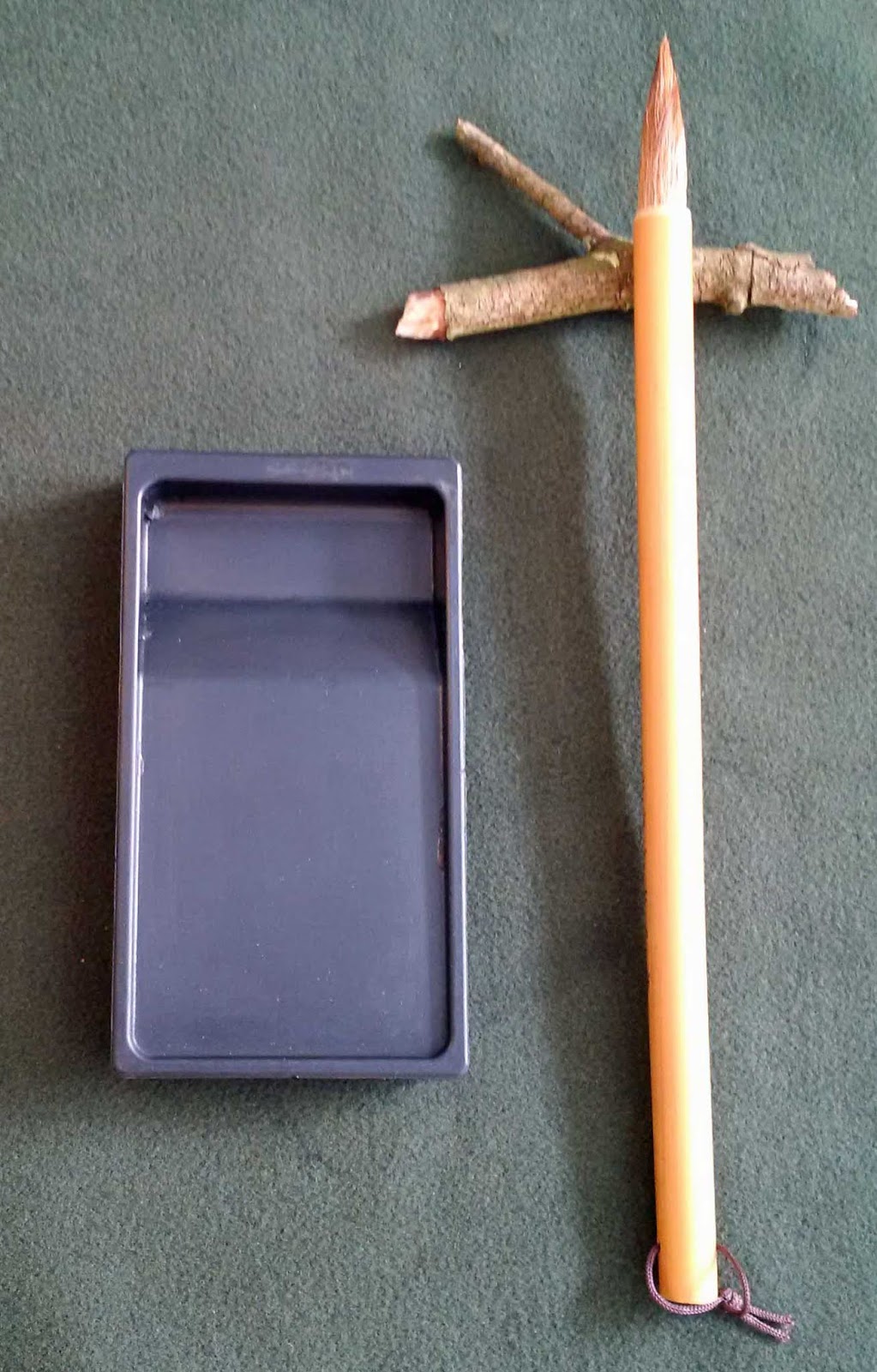
 To learn shodō (書道), a form of
Japanese calligraphy, one should be calm of mind, maybe with a view of cherry blossom. Instead I'm ferociously chewing off my lipstick and by the end of the class I look like Bette Davis in Whatever Happened to Baby Jane.
To learn shodō (書道), a form of
Japanese calligraphy, one should be calm of mind, maybe with a view of cherry blossom. Instead I'm ferociously chewing off my lipstick and by the end of the class I look like Bette Davis in Whatever Happened to Baby Jane.


 Home is where you hang your hat. But in ancient China, home was where you sacrificed animals to propitiate the gods, so the early ideogram for 'home' depicted an animal on a slab.



 This comment from The
Prestige Economy of a London Orchestra, a revealing PhD thesis by Dr
Francesca Carpos-Young, highlights a situation which led to Goldscheider v The
Royal Opera House Covent Garden Foundation, the subject of tonight’s King’s College
London event.
This comment from The
Prestige Economy of a London Orchestra, a revealing PhD thesis by Dr
Francesca Carpos-Young, highlights a situation which led to Goldscheider v The
Royal Opera House Covent Garden Foundation, the subject of tonight’s King’s College
London event. 


