Thursday, 7 May 2020

Jammin' for Justice

We're jammin', we're jammin'
And I hope you like jammin' too

                                   - Bob Marley


We're all stuck, computer screens freeze into lockdown at will, and we're having to improvise like mad. 

What does social distancing mean for jury trials? The all-party law reform and human rights organisation Justice is experimenting with mock Crown Court trials online, to assess their workability and fairness. I'm tuning in to the fictitious case of R v Christopher Hallett, concerning alleged unlawful wounding with a wheel brace at a petrol station following an altercation about loud music played in an open-top car. 

It's delayed by an hour and a half because a juror has tech problems. Then we see the virtual court with judge, jury, clerk, counsel, defendant, and witnesses in turn, like a pile-up of Punch and Judy booths, but there's no sound. I'd like a lip reader with me and a sign language interpreter on screen.

Prosecuting counsel wins on colour. His striking scarlet background seems to reinforce his message. Colour affects emotions. Red is a political colour to some. I would impose a neutral background. 

Everyone else sits in the grey-to-magnolia spectrum apart from the judge, who appears in front of multiple versions of the royal coat of arms, wallpaper style. 

I am uncomfortable with the prominence of the jury. I would rather not see them at all, as the present format allows them to be identified by people beyond the court. I certainly don't want to draw them.
 
At last the sound comes on. The judge is warning the jury that it can be hard to concentrate on a virtual scene: 'I ought to notice if any of you drifts off... I will say generally "time to wake up" as it were...' He points out that the jury's on-screen view of the witness is 'as good as if not better than the view you get in court' but balances that by saying that a blind judge is not at a disadvantage. I think of Sir John Fielding, the blind eighteenth century magistrate whose innovations helped to bring about stipendiary magistrates and the Bow Street Runners.

Next, prosecuting counsel piles on the drama: the defendant used a wheel brace 'to strike, to assault, to hit...'

There is bundle malfunction. Everyone can see the document except the judge. 'Don't worry about me,' he says, probably for the first and last time in his career on the bench.

There is an awful lot of face-touching, mainly from counsel and judge. Defence counsel manages finger licking too. A juror sneezes.


I'm drawing in an aimless sort of way. Sketching in the courts below the UK Supreme Court is illegal. I recently got in touch with the Royal Courts of Justice to check that this applied to hearings that were currently streamed. They confirmed that I would have to draw from memory - either switching off my device or retreating to another room. I pointed out that the picture would look like a Francis Bacon screaming pope with a Laura Ashley border. Today I'm ignoring the stricture as this is a mock-up.

In a virtual courtroom, no one knows what else you might have on your split screen. I resisted the stream from the Metropolitan Opera (Hamlet by Ambroise Thomas) and a random episode of Crown Court, a magnificent TV series which you are too young to know about but can be found on YouTube.

The brief lunch break is like a Shakespearean scene of comings and goings, overhearings and misunderstandings in a twilit forest, with Puckish technology thwarting the unwary. Individual cells blacken and flicker back to life. The judge removes his wig for some more face and head touching and stares into his camera.

'The public are still listening,'  the clerk warns judge and counsel.

'I'm going to mute my video,' says the judge, 'in case some gossip comes into my head that I can't resist sharing with you and the whole world.'
 
Face-touching judge

After the break, glitches are resolved. Professor Linda Mulcahy from Oxford University, one of the independent academics who is evaluating the test, does a brilliant turn as a witness for the defence. When the jury retires, the judge reckons that they won't reach a verdict: 'I'll give you odds,' he says, but fails to run an illegal book.

'Have you reached a verdict?' asks the clerk.

'No,' says the forewoman. The judge beams. In a show of hands, seven would convict, three would acquit, two don't know.

This is the fictional case of R v Christopher Hallett, indicted for s20 Offences Against the Person Act unlawful wounding. HH Alistair McCreath is presiding at the virtual Crown Court, Pimlico. The prosecutor is Mark Trafford QC. Defence counsel is Rosina Cottage QC.

Tuesday, 17 December 2019

Clare Holtham's memoir 'Under the Stars': alone on the lost hippy trail

I went as usual to sell some blood.

Clare Holtham (1948-2010) was a fearless traveller. Under the Stars is the unpublished memoir of her independent journeys overland from England to India in 1969 and the early 70s.

Here is the full text in four pdfs - just click on each link. Please email me (see right) if you have difficulty in accessing them:

Under the Stars Part 1
Under the Stars Part 2
Under the Stars Part 3
Under the Stars Part 4

Clare took public transport or hitch-hiked. The world turns, and the Buddhas of Bamiyan she photographed have been destroyed. Unprotected travellers can no longer follow her routes - but even Clare's account tells of westerners killed by tribesmen or a nervous border guard.

She smells water in the desert; keeps a meticulous food diary; engages with languages, literature, history and anthropology rather than hippies on the trail. She dallies with a customs officer and is attracted to an Uzbek chieftain she meets on the road, becoming his bride for a night. She maintains that drinking the local water builds her resistance to illness; brushes off a threatened robbery at gunpoint; makes her own luck (for example, one morning she gets up early to visit a tailor, thereby missing the Mickey Finn breakfast administered to other Europeans in the Afghan hostel who then have their passports stolen).

Clare writes with detached candour, driven by restless curiosity. She feels safer in central Asia than in 'cold Europe'. She banters politely but as an equal. She meets illiterate tribesmen bristling with guns and knives and knows at once that she can trust them with her life. Where does this equanimity come from in such a young woman, travelling mostly alone?

The answer is lost in the negative space of her narrative. There is no reliable account of her rudderless teenage years, which included a remand home, sleeping rough and a forced self-reliance. We don't know what norms she acquired while many of those who went on to join her at Newnham College, Cambridge, were being hot-housed and cosseted.

From the prologue to Under the Stars ('parents' = father and stepmother; L.C.C. = London County Council):

Clare's memoir is archived at Newnham, email archives@newn.cam.ac.uk.

Clare's book of poems, The Road from Herat, is featured in this short account of her extraordinary life: click here. Copies are available from Newnham's Roll Office (roll@newn.cam.ac.uk, tel. 01223 335757, personal callers welcome, preferably with prior notice), price £8. All proceeds go to a Newnham travel scholarship in Clare's name.

Any use of Clare's writing and pictures needs to be approved first by her literary executor Roger Garfitt, email r.garfitt@btinternet.com.

Drawings and maps

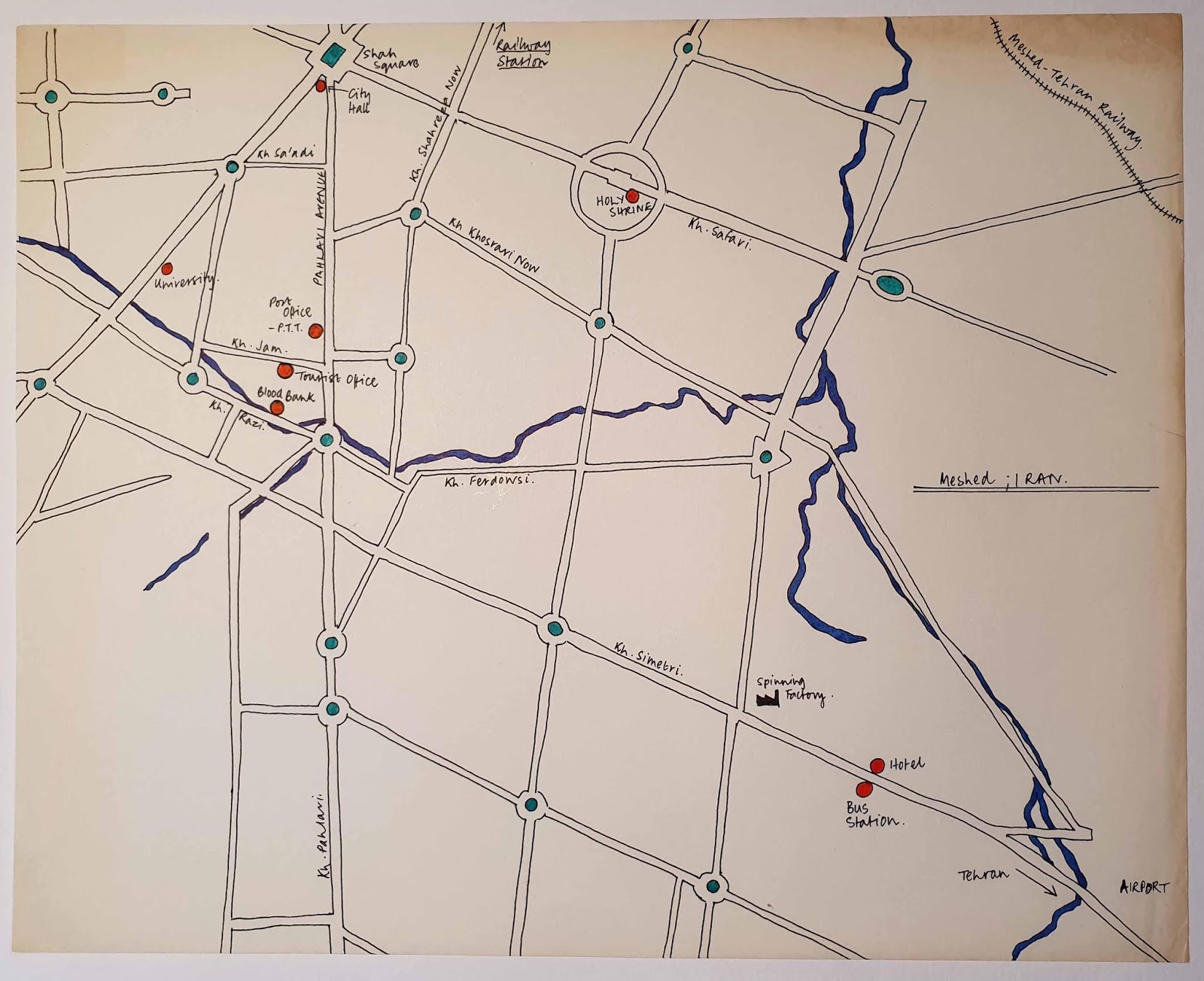
Clare drew beautiful maps and pictures. Some are here; the Newnham archive contains more, together with photographs and many rolls of film. She took Bartholomew's maps with her and may have traced some of them, but she was also capable of drawing maps freehand on a train window in Indian ink.


Thursday, 21 November 2019

Supreme Court: Gerry Adams's appeal


'I'm sufficiently old to be able to remember something of the contemporaneous events,' says Lord Kerr, who is presiding over R v Adams. To the girl who briefly sits beside me, flicking through WhatsApp, it's ancient history.

I remember the British confusion when the IRA bombing campaign reached the mainland in 1973. Metropolitan litter bins disappeared. Public lavatories at railway termini were briefly closed. It was said that the Bakerloo line would never be bombed as it serves the Irish community in Kilburn. I was told about a girl with an Irish accent carrying her brother's birthday cake on the Tube: the police cut the cake into little pieces to prove that it didn't contain explosives. Did that happen? There were more sophisticated ways of dealing with suspect devices but it was plausible at the time.


Lord Burnett, the Lord Chief Justice, has joined the Supreme Court bench today. Gerry Adams is absent. The court is tumbleweed alternating with tour parties who come and go with a swish of Gore-Tex on the wood and leather seats. The air conditioning is barely audible; the bagpiping busker outside can't be heard thanks to triple glazing. Now and then the Welsh slate clock on the wall makes its sinister rasp; disappointing too was the harsh, dissonant voice of Gerry Adams once the British were allowed to hear it, instead of the silver-toned actors who dubbed him from 1988-1994, when a broadcast ban applied to Irish dissident groups.

Professor Alan Paterson, author of Final Judgment, about the early years of the Supreme Court, slips in towards the end of the appeal.


At one point Lord Kerr, who was previously the Lord Chief Justice of Northern Ireland, appears to be attending to a paper cut on his finger. This is not the time or place to hold a silence for the adults and children killed because of the Troubles but a tiny drop of blood shows up as a pathetic fallacy.

Gerry Adams is trying to clean up his criminal record. In 1975 he was convicted twice for attempting to escape from the Maze prison where he was interned without charge or trial. But government papers released under the 30-year rule showed that his interim custody order, made by the Minister of State under the Detention of Terrorists (Northern Ireland) Order 1972 art. 4(1), had not been considered by the Secretary of State for Northern Ireland, who was then Willie Whitelaw. Does this make the order invalid?


The wording goes under the microscope. As with Brexit ('a' customs union versus 'the' customs union) we are in 'a' Secretary of State versus 'the' Secretary of State territory. In play is Carltona Ltd v Commissioners of Works which equated acts of government officials with acts of the minister.

Counsel makes a reference to 'groping at perpetual twilight' and when the Supreme Court puts the recorded film on its website I will be able to check the context but meanwhile I am left with Isaiah 59:10: We grope for the wall like the blind, and we grope as if we had no eyes: we stumble at noon day as in the night; we are in desolate places as dead men.


After the hearing I encounter a real live hunger strike on Victoria Street, far in distance and time from the ten Provisional IRA hunger strikers who died in the Maze in 1981: beyond House of Fraser's twinkly Christmas display, Extinction Rebellion campaigners are lodged outside Labour Party HQ.

Further up and down this street which connects a Protestant abbey and a Catholic cathedral, rough sleepers are muffled against the cold or insensible to it. A woman handing out leaflets says, 'Give your lives to Jesus, people.'

Coda: the British have a long and painful tradition of indifference to/ignorance of Ireland. I am beyond sickened by those who would trash the Good Friday Agreement for the sake of pitiful delusions about Brexit. It has been keeping a fragile peace, more or less, since 1998.


Friday, 1 November 2019

Noises on and off: in the magistrates' court

When it comes to penetrating the studied opacity of a magistrates' court I'm a bungling novice, so I'm waiting for the appearance of a defendant who's already been bailed and gone home.

I'm encumbered by my sodden folding umbrella (the stand at the entrance is reserved for weapon-umbrellas, the non-telescopic kind).

I am in a row of public seats at the back. About 18 inches in front of these seats is a horizontal steel cylinder, the height of my jaw when seated. I feel penned in. When I inadvertently knock the bar's upright hollow metal support, it sounds like the demonic church bells from the drug-induced Dream of a Witches' Sabbath in Berlioz's Symphonie Fantastique.

The courtoom is largely composed of horizontals, from the long wood panels behind the wide raised bench to the narrow stripes in the carpet tiles. This makes the greenish verticals between the security glass panels of the dock rather striking: they evoke bars.

The dock's separateness says 'guilty as hell'. It has a locked glass door to the courtroom and another door at the back leading to mysteries below. There are chairs and a big red panic button. Defendants who have been detained emerge through the internal door. Those who have not been detained are ushered into the dock from the courtroom by an official and locked in. (This contrasts with the doorless lavatory cubicles in the same building.)

The official takes away the key. The defendant stands when addressed by the person I assume to be a district judge, no longer called a stipendiary magistrate, who is wearing a lot of very white pearls.  

When it's quiet you can hear the clock ticking. The microphones for bench, clerk and advocates create a flattering, authoritative resonance. The person in the dock is miked differently if at all and speaks from a different acoustic: the effect is drier, duller.

In Winchester Crown Court I saw the Naked Rambler lean forward in the dock at times, straining to catch through the glass what was being said in the courtroom, and thereby forced to adopt a servile posture.

Much has been said about the message sent out by the dock. At least this one can be seen from the public seats. In many courts, including some built this century, it is not.

To the left of the bench, a door leading backstage is propped wide open with three legal tomes. Behind it, another door stands open onto a corridor from which we occasionally hear incongruous snatches of conversation and laughter. Mortals at liberty are glimpsed walking past on a raised level, indifferent to the courtroom scene.

The accumulation of cases is depressing. If someone is already working mostly to pay fines, what is the effect of imposing another fine? If someone can be provoked to violence, or has a mental disorder, or has been changed by long-term use of drugs, or has had a miserable education or a rotten family life or any combination of these factors, is another prison sentence going to accomplish anything other than keep an offender out of the public's way for a while?

During a brief adjournment, someone pops his head round the door for a chat with his colleagues.
'What have you got later?' he asks.
'All your rubbish from Court 10.'

Outside in the waiting area, a lawyer at the end of his tether addresses the air: 'I've been waiting for a Polish interpreter for one and a half hours.'  He is a living cliché from the well-documented, underfunded travails of the justice system.

The day ends with a surprise trip to A&E for excellent treatment from EU citizens in an understaffed hospital, a last hurrah before the NHS swirls down the plughole of despicable political ambition.Will the justice system join it?