Thursday, 29 May 2014

Supreme Court art: Museums at Night event

I've spoken in desiccated meeting rooms, ill-converted sweatshops and a pub in Farringdon where the post-punk audience smuggled in supermarket lager. Classy.

So it was very nice to give a slide show in the well-ordered surroundings of Court 2 as part of the Supreme Court's Museums at Night event in May, held in the spirit of open justice.

My theme was quick and dirty drawing, the kind I blog about here, and I pinched the idea from a sentence (taken wildly out of context) in Lord Neuberger's Tom Sargant memorial lecture last year called Justice in an age of austerity: 'In many cases, quick and dirty justice would do better justice than the full majesty of a traditional common law trial.'


I showed how I emerged from the primordial soup of life class to draw and write about people under the Westway (where the A40 flies over Portobello Road). Then I depicted the tragi-comedy of Occupy's London protest camps before arriving at the Supreme Court, where emotions are inspired and yet mercifully cauterised at the same time by the legal process. It's all here on the blog.

I invoked Hogarth, Dame Laura Knight (The Dock, Nuremberg - what a gig), Sir Peter Blake, an Expressionist Occupy protester called Rupert, Sidney Paget (creator of the iconography of Sherlock Holmes and great-grandfather of Michael Paget of Cornerstone Barristers), and Jacques-Louis David, whose sketch of Marie-Antoinette en route to the guillotine is the ultimate quick and dirty legal drawing.

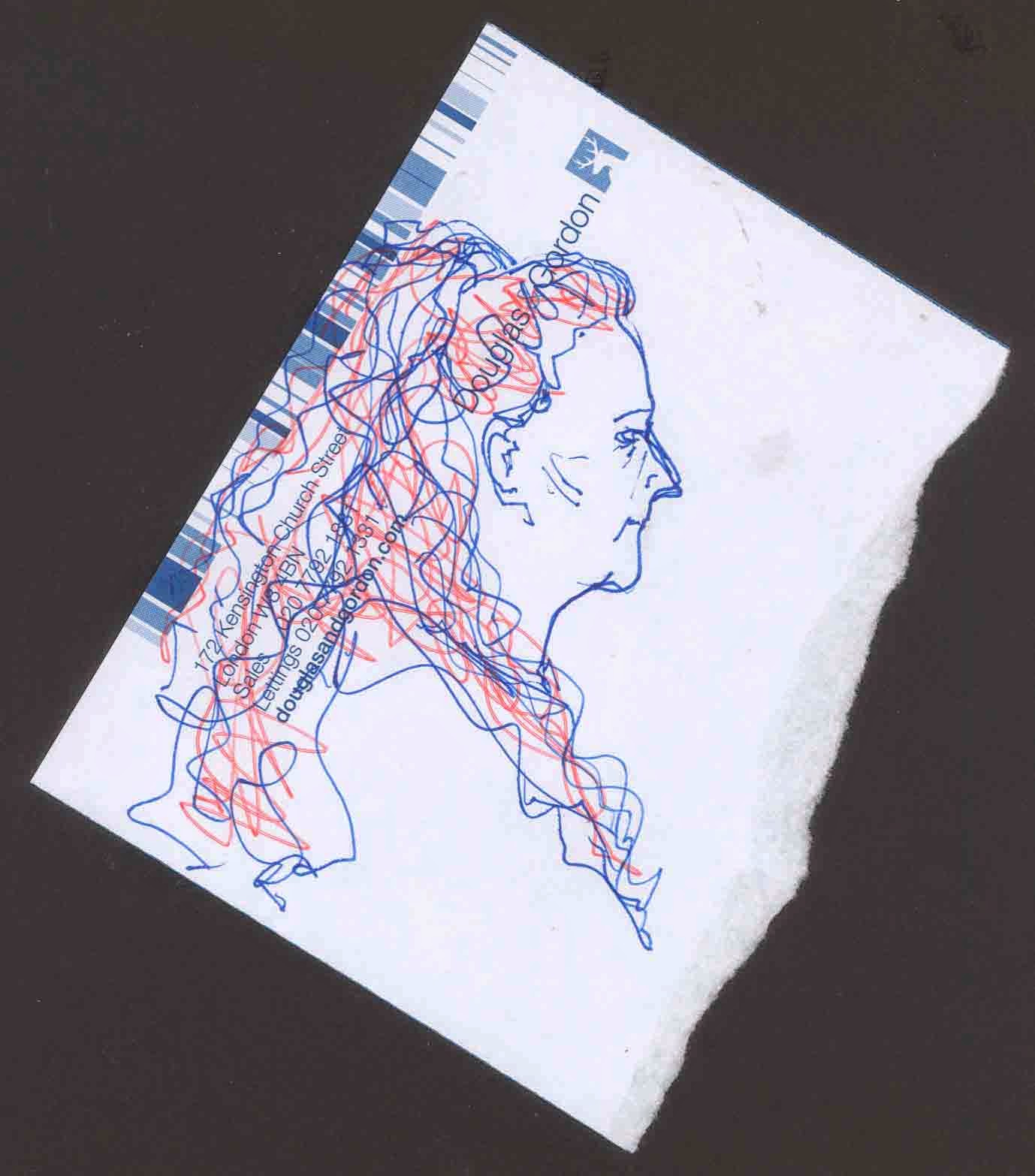
I handed out postcards of the three drawings above.

Among the other entertainments was the Inner Temple Drama Society's jolly murder mystery in Court 1. The sketches below are from a rehearsal.

@otium_Catulle

Monday, 26 May 2014

Supreme Court art: things some visitors don't know

There is plenty I don't know about the Supreme Court, but let's run through a few basics:

Your Swiss Army knife and other sharps will be well looked after during your visit.

My neighbour who helped to rescue Apollo 13 goes there just for the café.

There is no jury, no witness, no cross-examination. At hearings, the QCs and barristers don't usually wear wigs or gowns, the justices never, so you can amuse yourself by working out which suits are bespoke.

Photography is not allowed during hearings. If a dishevelled woman with leopard-print spectacle frames glares at you when you reach for your camera, thank me afterwards - I've saved you from being pounced on by an usher.

Some people experience panic (atavistically, the terrifying presence of the great god Pan) when entering a courtroom. This feeling is not confined to the barristers. There is an inexorable coded system at work here with a faint folk memory of human sacrifice.

But keep calm - we are not in America. People don't bang gavels or jump up crying: 'Objection, your honour!'

More key facts coming shortly. Meanwhile, my last visit to the court started badly when my canvas art bag was eaten by the door of a Routemaster (real Routemasters don't have doors). The hearing was brief so here's just one drawing - of George Spencer Watson's portrait in Court 1 of Sir Montagu Sharpe, who deserves more than 'Forgotten Man of Middlesex' as the subtitle of his biography.


Saturday, 26 April 2014

On not drawing at the hacking trial on 24 April 2014

Outside the court
'Everyone's at Max Clifford,' says a journalist who, like me, is at the hacking trial in the Old Bailey. A sign in the lift says DO NOT TALK ABOUT CASES IN THE LIFT.

It is illegal to draw here. Proper court artists do it from memory.

So what does an improper non-court 'artist' with no trained memory do?


David Spens QC, cross-examining Andy Coulson, refers to a news editor talking about trying to pinpoint the Lotto rapist by triangulation (based on the locations of his phone signals).

Coulson seems indignant at the use of a long word and says he'd have remembered it. 'If anyone had used a phrase [sic] like triangulation I would have been incredulous.'


I know what triangulation means (stupefying as that might be to Mr Coulson) but here in court I lack the wherewithal to do it.

I could still get a more accurate drawing, however, if I split the scene mentally into triangles and write a description (top right of counsel's wig, tip of sword, bridge of defendant's nose, 40°, 90°, 50°).


I'm too distracted to do that, so I have to rely on memory. And, to echo something which is said in the witness box a lot today, I don't remember. I don't see the point of drawing from memory (and I'm far too posh to draw from photos) but I haven't reached the important stage of creating something new from memory.

Meanwhile, casual scribbles seem to be the most reliable way of tapping into blurred memory.


When the day's hearing is over, I go to life class. Before kick-off I ask the model to pose briefly in one of Rebekah Brooks's default attitudes.
Life-class model in Rebekah Brooks's pose


The aura around Rebekah Brooks reminds me of two pre-Raphaelite images:

'Hope', Edward Burne-Jones

'Hope', George Frederic Watts


Thursday, 3 April 2014

Supreme Court art: true colours

I awake to an email from a stranger: 'I've just seen the fantastic drawings you did on Friday night. Wow! I was wearing the pink eyelashes!' 

This morning it's a welter of charcoal suits - except for that of the solicitor Mark Stephens, in a mysterious blue which sits half-way between Cambridge and Oxford via cobalt.

He is at the Judicial Committee of the Privy Council for Landmark Ltd and Woods Development Ltd v American International Bank (in receivership), a case about an unpaid electricity bill which has wafted in from Antigua and Barbuda. The hearing is despatched before lunchtime. 

In the café I choose a blokey microwaved bacon roll even though I know that 'microwave' and 'bacon' don't go together.

The emblematic carpet, designed by Sir Peter Blake, divides opinion. I love it.

In the basement, two women are comparing a fresh carpet sample with the original, which is wilting. Heavy staircase traffic is a problem.


I think of H. Rider Haggard's She, who eroded her private stone steps: "I can remember when those stairs were fresh and level, but for two thousand years and more have I gone down hither day by day, and see, my sandals have worn out the solid rock!'

In Court 2, where the heavy velvet curtains do a moody fandango, I try black paper to counteract the whiter-shade-of-pale walls. It doesn't work.

Hounga v Allen and another asks if a race discrimination claim arising from employment is barred if the employment contract is tainted by illegality. The appellant was an illegal immigrant working as an unpaid servant, having been spirited into the UK by her initial employer.


In this safe-seeming courtroom, the words 'trafficking' and 'slave' can be used without emotion, but counsel are arguing with veiled vehemence while they watch the remorseless clock and, as Lady Hale concludes, 'It is a difficult and an anxious case.'

More pictures if you scroll down.

The colour swatch box at the end is giving me repeated pangs of job envy.


Wednesday, 19 March 2014

Supreme Court art: inappropriateness

The squirrel does some cute acrobatics, then shimmies into its drey on the ledge outside my bathroom window. The closest thing I have to a pet.

I head for L. Batley Pet Products Ltd v North Lanarkshire Council, which could have been avoided by simple communication between the parties - by carrier pigeon, say - and is about dilapidations, not pets.

Did the company (the landlord) have to give written notice to the council (the tenant) to trigger the obligation to reinstate the property to its original condition?

'The power of irritancy' gets a considerable airing in court today and I think of the power of pets to irritate: the breakages, the nocturnal marauding, the emotional blackmail real or imagined, the journeys not made, the havoc they wreak when they die, the expense.

With a blurred sense of anthropomorphism, our ancestors were goaded into litigation: trials of animals (domestic and pests, defended and undefended) were recorded from the middle ages until the Enlightenment and beyond. The tale about the monkey recovered from a French shipwreck, tried and hanged in Lord Mandelson's former constituency of Hartlepool during the Napoleonic wars may not be based on fact.


We now draw a line between animals and humans as defendants. But how stable is the line between humans and other humans? I will be an 'appropriate adult' in a court soon. On behalf of another adult. Which implies a degree of inappropriateness somewhere in the process. I'm not permitted to write about that. Understandable, but frustrating.


After the hearing I wander down to the basement to seek out the Supreme Court's companion animals. A bronze horse is poised on a swallow in flight, a gift from the Supreme People's Court of the People's Republic of China.

The souvenir bears are sitting in the showcase. A woman in Wyoming was arrested this month for aggravated assault and battery after stabbing a five-foot teddy bear during an attack on her ex-boyfriend.

PS: the Grey Squirrels (Prohibition of Importation and Keeping) Order 1937 has just been scrapped. Failing to alert the authorities to the presence of a grey squirrel on your land is no longer an offence.


Wednesday, 5 March 2014

Supreme Court art: time no longer

'A drawing is a map of time.' I wish I'd said that, but it was said to me by an artist called Richard Cole.

This picture of two QCs on their feet reflects what I see over time as as I draw from right to left.

At issue in R (on the application of Fitzroy George) v the Secretary of State for the Home Department is whether someone's indefinite leave to remain in the UK, which was invalidated by a deportation order, remains invalid if the deportation order is revoked.

There is much discussion about the difference between 'revokes' and 'ceases to have effect'. And does 'invalidate' imply permanence? In Siberia, a virus has just been revived from 30,000-year-old ice.

In the café at lunchtime I meet a couple with a hearing dog for deaf people, a placid golden Labrador.

'We waited six years for him. He was cared for from the age of ten weeks to ten months by a prisoner in Bristol. All I know about the prisoner is that he was very big bald guy covered in tattoos so I like to think of him cuddling this tiny puppy.'

Court 2 has an air of death, starting with the walls of white. The colour of mourning in so much of the world. The pale horse.

The stark walls are asking for graffiti: MENE, MENE, TEKEL, UPHARSIN, thou art weighed in the balances, and art found wanting.

The Welsh slate clock, regularly checked by apprehensive counsel, goes !!SKRANNK!! from time to time, a relentless ratchety sound.

And the flowers. Hectic on the curtains, silhouetted on the blinds, strewn on Peter Blake's carpet, gem-like on the plaque above the bench. All at their point of perfection. A transitory moment carrying its inevitable decay.

Some bat-sense makes me turn to see a tourist in the back row produce a camera from his anorak and aim it at the bench. I shoot him a governessy look. He puts it away. He'll never know I saved him from an usher's wrath.

Before I leave, I cruise the basement showcases. The folklorique gift from the Russian delegation owes something to Catherine the Great. More pictures if you scroll down.


Catherine the Great in her coronation robe (detail), 1778-9, by Vigilius Eriksen


Tuesday, 18 February 2014

Supreme Court art: Welsh bards

I am startled to hear an invocation of the Middle English poet Gower. No, it's GOWA (the Government of Wales Act 2006). But Wales is ungovernable if you read R. S. Thomas:

To live in Wales is to be conscious
At dusk of the spilled blood
That went into the making of the wild sky,
Dyeing the immaculate rivers
In all their courses.
It is to be aware,
Above the noisy tractor
And hum of the machine
Of strife in the strung woods,
Vibrant with sped arrows.
You cannot live in the present,
At least not in Wales

(From Welsh Landscape)

At issue today is whether, under the Agricultural Sector (Wales) Bill, the National Assembly for Wales can set minimum wages for more than 13,000 agricultural workers. Scotland and Northern Ireland have their own wages boards. 

'There's a distinction to be drawn between legislative function and parliamentary intention,' is uttered from the bench, a frequent theme in this court.


I return to ungovernable forces, chiefly Dylan Thomas:

I build my bellowing ark
To the best of my love
As the flood begins,
Out of the fountainhead
Of fear, rage red, manalive,
Molten and mountainous to stream
Over the wound asleep
Sheep white hollow farms

To Wales in my arms. 

(From Author's Prologue)


Following today's hearing I can advise you on how to become Attorney General for England and Wales. Don't rear up and whinny at bundle malfunction. Make silence sound purposeful rather than lost. Be alert to the justices and allow them to cough or study a screen for a moment without losing your rhythm. Don't go near contact lenses - you're not a film star. Sound interested. Then you too will fill Court One on a wet Monday. 

I check the National Assembly for Wales's art holdings for anything oracular about the hearing. I ignore a sequence called Four Horsemen of the Apocalypse. (You can find out about public paintings on a site pointedly called www.bbc.co.uk/arts/yourpaintings.)  

Farm, Penne du Tarn (1958) by Mary Fedden is on loan to the National Assembly for Wales from the National Museum of Wales.