Friday, 27 June 2014

Supreme Court art: piano piano

Court 1
Baldwin King and Hariette Richardson v Gershon Robertson is about a contested parcel of land. A key word is 'entail' so I've walked smack into Pride and Prejudice, which starts with one.

Mr Darcy might well have derived some of his wealth from slavery in Saint Vincent and the Grenadines, today's jurisdiction for the Judicial Committee of the Privy Council (Court 3).

The case goes back to a will made in 1856, the year Madame Bovary was published. The plot involves testamentary disposition, adverse posession and beneficiaries. The characters are bewildering.

'The judge seems to have overlooked the evidence about Great Aunt Tilly and Jericho,' says Lord Mance. Jericho was known as Westfield John. But was he also known as Mr Robertson?


Then after a chilli salmon sandwich it's R v London Borough of Newham and another in Court 1 where counsel, well into extra time, is throwing the kitchen sink at the issues of housing, human rights and statutory interpretation. Homelessness trails its cloak through the court.

'Am I very politely being told to sit down?' enquires counsel. 'I can't resist the temptation to take you to the Slovenian nationalisation.'
'Do try,' murmurs the bench.
But we're off to Ljubljana.


The following day it's Ghany v the Attorney General and another from Trinidad and Tobago, a personal injury case about falling downstairs in a police building. I make a note to buy another pack of frozen peas for my foot which has felt as if an axe-head is buried in it ever since I tripped over a step in barristers' chambers.


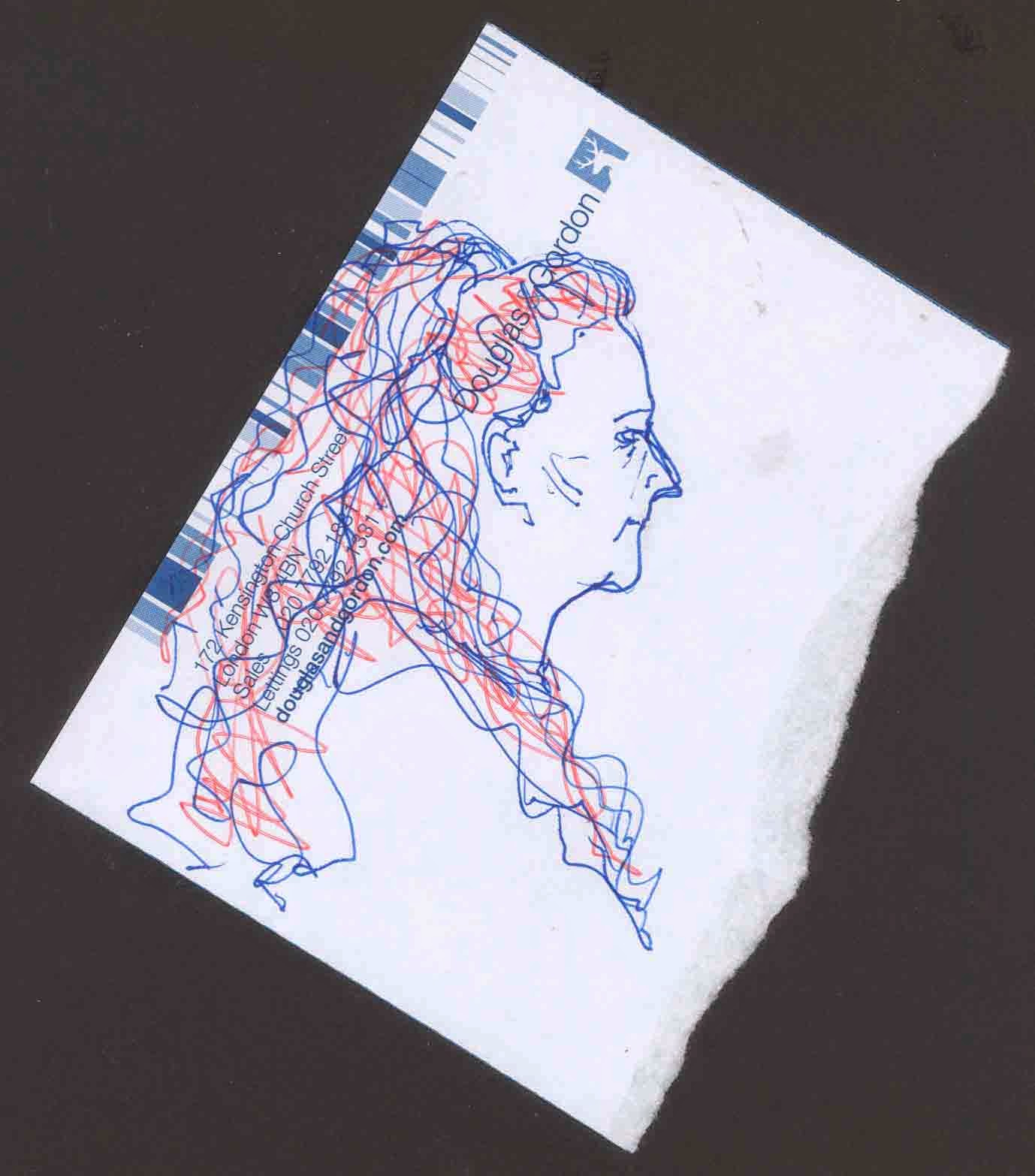
On the way home, emboldened or perhaps tainted by the day's buzz about the hacking trial verdicts, I pap a passing genius. Where are my manners?


Wednesday, 25 June 2014

Supreme Court art: 'What will survive of us is love'

We're waiting for the Nicklinson judgment. About the right to assisted suicide.

Tony Nicklinson's widow Jane is calm.

A young barrister looks around the courtroom, stares up at the paintings. A silk arrives. 'We're unrobed by the way. Didn't you get the email?' The barrister quickly stuffs away his wig and gown.

Lord Neuberger reads the summary of the judgment, careful to delineate the divisions of opinion between the justices.

Afterwards, I look down at the press melée outside in Parliament Square.

Joshua Rozenberg gives an interview. A reporter-mermaid keeps brushing her long blonde hair; she checks her reflection in the camera lens, in the screen of her phone. Urban birds may one day incorporate the loose hairs into their nests.


After a cluster of interviews, Jane Nicklinson sits quietly, having just lost a case. A triumphant bride in a white net extrusion strides into the tableau with her groom, poses briefly in front of the building and sweeps away with her entourage. Tall, beautiful, confident.

The bride does not know that she was a few feet away from Jane, an icon of marriage. In sickness and in health. Yup.

Till death us do part. Except, you see, it doesn't.

I wrote about my day at the hearing here:
http://isobelwilliams.blogspot.co.uk/2013/12/uneaseful-death.html

More pictures if you scroll down.


Thursday, 12 June 2014

Supreme Court art: which butterfly, which wheel?

Today's respondent is Westminster Magistrates' Court so I drift back to my recent visit there.


In the absence of any drinking water I reluctantly put some coins in the tea machine. Nothing happens.

I look round at a security guard.
'Do you know anything about the tea machine, please?'
'It's out of order. There's a lot of money in there.'
'Could someone put up a sign saying out of order?'
He glares.
'Every time we do that, one of you lot rips it down.'

I'm here as an appropriate adult on behalf of an adult. There's no timetable and he could be called into court any minute. His solicitor is late but she's probably having a terrible time because of the cuts. I find another drinks machine and take a few sips of Coke for the second and I hope last time in my life.

The solicitor arrives. I explain about my friend. A mental health nurse is found in the bowels of the building. She interviews my friend and writes a report.

Hours pass. I've had enough of the official brush-off so I change tack: 'Excuse me, I've got to leave soon to meet a judge. What time is my friend going to be called into court, please?' After a bit of hurrumphing he is abruptly squeezed in.

On the floor behind the tea machine I spot a laminated 'out of order' sign, complete with a lump of Blu-Tack, so I stick it on the front.

Over lunch, the judge comments that the law ought to realise it's a service industry.

None of  the above is meant to detract from the appalling seriousness of today's Supreme Court case, VB and others v Westminster Magistrates' Court, or from the genuine welcome, openness and courtesy to be found everywhere in the Supreme Court, where a child can sleep with his head on his mother's shoulder in the public seats even though allegations of torture and genocide in Rwanda lie at the heart of this dreadful matter.

'We do acknowledge that what we're asking for is without precedent in extradition law,' says counsel.

More pictures if you scroll down.

Photo of sky reflected on Supreme Court café table


Sunday, 8 June 2014

Supreme Court art: vulnerabilities

'We can't reconstitute the trust in the position of putting Humpty together again,' says the bench. How the images from our earliest years inform us.

Attentive young people fill the public seats today. If they're under 16 I need parental consent to draw them. It's harder for me to tell these days. I take a punt on it. They've probably got degrees and stuff.

Counsel is harking back to earlier customs - not always safe when living precedent is sitting in front of you. 'I worked in solicitors' offices fifty years ago and they weren't doing that then,' chips in Lady Hale. 'My husband did sixty years ago and he was.'


Today's case is about a trust fund wrongly paid away in breach of trust. Buried deep in AIB Group plc v Mark Redler & Co, Solicitors are the unnamed instigators who became bankrupt somewhere along the way and are referred to as 'the Borrowers'.

Hopelessly atavistic today - it was emotional at the opera house last night and I get the bends if I float back up too quickly - I think of the miniature people created by Mary Norton.

The anxieties and under-resourced improvisations of Homily and Pod reminded me of my parents when I read her books as a child. I recall my misery one Christmas when the cat was sick over the scarcely unwrapped Puffin edition of The Borrowers Aloft.


Back in court it's hands-behind-the-back today: when quizzed by the bench, there is a tendency for counsel to present a broad-shouldered front to the five justices while, out of sight, the dominant hand clasps the weaker, or a single hand is a node of tension.

An opera singer told me that some singers pour physical tension into one area of the body, when a whole-body approach to stance, balance and breathing would be better - for relaxation and vocal production, anyway, but that may not be the top priority in court for all I know. Maybe the hands help with that coiled-like-a-serpent-ready-to-strike thing.

It all feels a bit on edge today. 'I can't draw a line precisely,' says counsel. Join the club, mate. 'If  we journey down the route of drawing the line more fuzzily...' Take it from me, that won't help.

More pictures if you scroll down.


Thursday, 29 May 2014

Supreme Court art: Museums at Night event

I've spoken in desiccated meeting rooms, ill-converted sweatshops and a pub in Farringdon where the post-punk audience smuggled in supermarket lager. Classy.

So it was very nice to give a slide show in the well-ordered surroundings of Court 2 as part of the Supreme Court's Museums at Night event in May, held in the spirit of open justice.

My theme was quick and dirty drawing, the kind I blog about here, and I pinched the idea from a sentence (taken wildly out of context) in Lord Neuberger's Tom Sargant memorial lecture last year called Justice in an age of austerity: 'In many cases, quick and dirty justice would do better justice than the full majesty of a traditional common law trial.'


I showed how I emerged from the primordial soup of life class to draw and write about people under the Westway (where the A40 flies over Portobello Road). Then I depicted the tragi-comedy of Occupy's London protest camps before arriving at the Supreme Court, where emotions are inspired and yet mercifully cauterised at the same time by the legal process. It's all here on the blog.

I invoked Hogarth, Dame Laura Knight (The Dock, Nuremberg - what a gig), Sir Peter Blake, an Expressionist Occupy protester called Rupert, Sidney Paget (creator of the iconography of Sherlock Holmes and great-grandfather of Michael Paget of Cornerstone Barristers), and Jacques-Louis David, whose sketch of Marie-Antoinette en route to the guillotine is the ultimate quick and dirty legal drawing.

I handed out postcards of the three drawings above.

Among the other entertainments was the Inner Temple Drama Society's jolly murder mystery in Court 1. The sketches below are from a rehearsal.

@otium_Catulle

Monday, 26 May 2014

Supreme Court art: things some visitors don't know

There is plenty I don't know about the Supreme Court, but let's run through a few basics:

Your Swiss Army knife and other sharps will be well looked after during your visit.

My neighbour who helped to rescue Apollo 13 goes there just for the café.

There is no jury, no witness, no cross-examination. At hearings, the QCs and barristers don't usually wear wigs or gowns, the justices never, so you can amuse yourself by working out which suits are bespoke.

Photography is not allowed during hearings. If a dishevelled woman with leopard-print spectacle frames glares at you when you reach for your camera, thank me afterwards - I've saved you from being pounced on by an usher.

Some people experience panic (atavistically, the terrifying presence of the great god Pan) when entering a courtroom. This feeling is not confined to the barristers. There is an inexorable coded system at work here with a faint folk memory of human sacrifice.

But keep calm - we are not in America. People don't bang gavels or jump up crying: 'Objection, your honour!'

More key facts coming shortly. Meanwhile, my last visit to the court started badly when my canvas art bag was eaten by the door of a Routemaster (real Routemasters don't have doors). The hearing was brief so here's just one drawing - of George Spencer Watson's portrait in Court 1 of Sir Montagu Sharpe, who deserves more than 'Forgotten Man of Middlesex' as the subtitle of his biography.


Saturday, 26 April 2014

On not drawing at the hacking trial on 24 April 2014

Outside the court
'Everyone's at Max Clifford,' says a journalist who, like me, is at the hacking trial in the Old Bailey. A sign in the lift says DO NOT TALK ABOUT CASES IN THE LIFT.

It is illegal to draw here. Proper court artists do it from memory.

So what does an improper non-court 'artist' with no trained memory do?


David Spens QC, cross-examining Andy Coulson, refers to a news editor talking about trying to pinpoint the Lotto rapist by triangulation (based on the locations of his phone signals).

Coulson seems indignant at the use of a long word and says he'd have remembered it. 'If anyone had used a phrase [sic] like triangulation I would have been incredulous.'


I know what triangulation means (stupefying as that might be to Mr Coulson) but here in court I lack the wherewithal to do it.

I could still get a more accurate drawing, however, if I split the scene mentally into triangles and write a description (top right of counsel's wig, tip of sword, bridge of defendant's nose, 40°, 90°, 50°).


I'm too distracted to do that, so I have to rely on memory. And, to echo something which is said in the witness box a lot today, I don't remember. I don't see the point of drawing from memory (and I'm far too posh to draw from photos) but I haven't reached the important stage of creating something new from memory.

Meanwhile, casual scribbles seem to be the most reliable way of tapping into blurred memory.


When the day's hearing is over, I go to life class. Before kick-off I ask the model to pose briefly in one of Rebekah Brooks's default attitudes.
Life-class model in Rebekah Brooks's pose


The aura around Rebekah Brooks reminds me of two pre-Raphaelite images:

'Hope', Edward Burne-Jones

'Hope', George Frederic Watts